


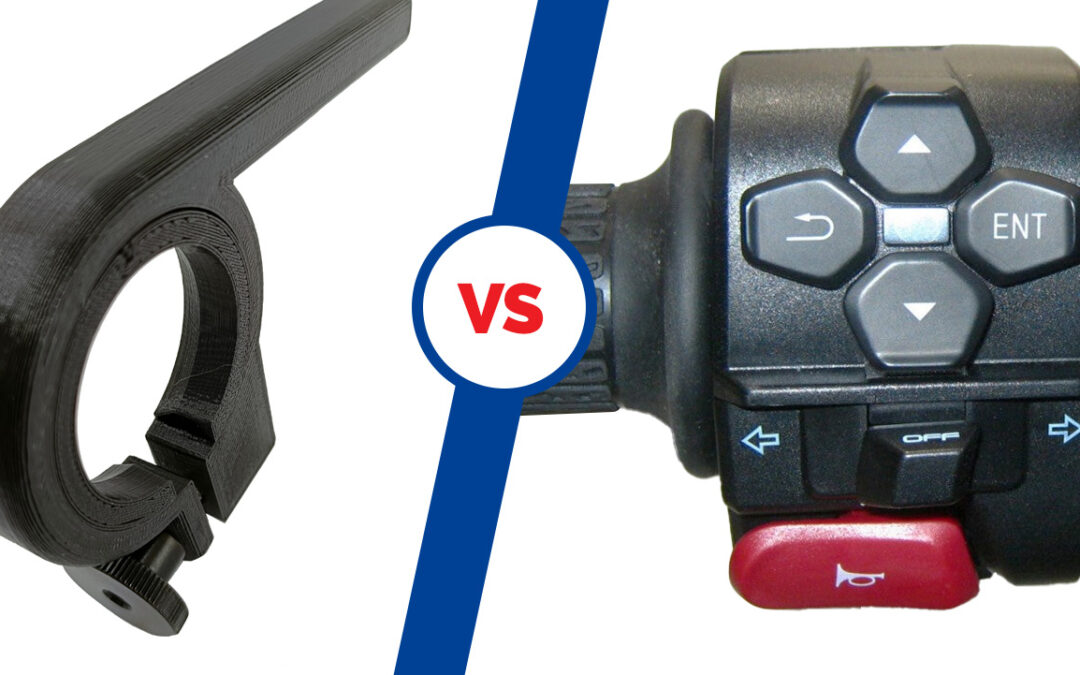
A Comparison of Benefits, Safety, and Precision
Riders often face a choice between throttle locks and electronic cruise controls when it comes to maintaining speed on their vehicles, whether for long-distance travel, comfort, or safety. While both serve the purpose of reducing manual throttle control, they function very differently. Throttle locks offer a basic, low-cost solution, while electronic cruise controls provide more advanced features that include safety enhancements and speed precision. In this article, we’ll explore the pros and cons of both systems, comparing factors like safety, ease of use, speed control, and cost to help determine which option might be better suited for riders.
Throttle Locks:
Simple but Limited Throttle locks are mechanical devices that physically hold the throttle in a fixed position. They are popular because they are inexpensive and easy to install, often requiring no special tools or expertise. However, their simplicity can also be a drawback in terms of safety and precision.
Pros of Throttle Locks:
- Affordability: One of the most appealing aspects of throttle locks is their low cost, typically ranging between $20 and $100.
- Ease of Installation: Throttle locks are easy to install, making them an attractive choice for riders who want a quick fix without having to modify their vehicle or invest in professional installation.
- Basic Speed Maintenance: For riders looking for simple relief from throttle grip fatigue, throttle locks can hold the throttle in place for long stretches of road.
Cons of Throttle Locks:
- Lack of Speed Precision: Throttle locks do not adjust to changes in terrain. This means that if you’re going uphill, you will lose speed, and if you’re going downhill, the vehicle may accelerate unexpectedly. There is no automatic adjustment to maintain a consistent speed.
- Safety Risks: Throttle locks can be unreliable and potentially dangerous. Since they lock the throttle in one position, they limit the rider’s ability to react to sudden changes, such as obstacles or emergency situations. A stuck throttle lock could pose serious risks to the rider.
- Unsuited for Varied Terrain: On hilly or uneven terrain, throttle locks are inefficient, as riders need to manually adjust their speed frequently to compensate for changes in the road. This can become a tedious task, reducing the overall comfort and convenience of the ride. While throttle locks are a quick and inexpensive solution, their lack of adaptability and potential safety risks make them less desirable for riders who prioritize precision and control.
Electronic Cruise Controls:
Precision and Safety Electronic cruise control systems provide a more advanced alternative to throttle locks, offering superior precision, adaptability, and safety. These systems automatically adjust the throttle to maintain a consistent speed, regardless of changes in terrain or load.
Pros of Electronic Cruise Controls:
- Precision Speed Control: Electronic cruise controls automatically adjust to changes in terrain, ensuring that the vehicle maintains a constant speed whether going uphill or downhill. This prevents unexpected acceleration or deceleration, providing riders with a smoother and more controlled experience.
- Enhanced Safety: One of the key advantages of electronic cruise controls is their built-in safety features. Riders can easily disengage the system by applying the brakes or clutch, ensuring that they can quickly regain control in emergency situations. Unlike throttle locks, electronic cruise controls do not hold the throttle in a fixed position, allowing for faster reactions.
- Reduced Rider Fatigue: By maintaining a consistent speed, electronic cruise controls reduce the need for constant throttle adjustments, helping riders avoid fatigue, especially on long rides. This allows them to focus more on the road and less on managing speed.
- Consistent Power Output: Unlike throttle locks, which may reduce power on inclines, electronic cruise controls maintain a steady speed by automatically adjusting power output, making them ideal for varied terrain.
Cons of Electronic Cruise Controls:
- Higher Cost: Electronic cruise controls are more expensive than throttle locks, with prices typically ranging from $600 to $900 or more, depending on the vehicle and system.
- Complex Installation: Installing electronic cruise control systems is more complex and may require professional installation. However, many riders find the long-term benefits far outweigh the initial effort and cost of installation.
Comparing Precision and Safety
When it comes to maintaining consistent speed and safety, electronic cruise controls are far superior to throttle locks. The ability to automatically adjust speed based on the terrain ensures that riders always maintain the appropriate pace without constantly having to tweak the throttle. This is particularly important when navigating varied terrain or dealing with sudden changes in road conditions. Safety is another area where electronic cruise controls excel. The quick disengagement feature ensures that riders can regain control immediately, reducing the risk of accidents caused by a stuck throttle or loss of power. By contrast, throttle locks can be unpredictable and potentially dangerous in emergency situations, as they physically lock the throttle in place.
Final Thoughts
While throttle locks are a budget-friendly option, the long-term benefits of electronic cruise controls—such as improved safety, comfort, and precision—justify their higher cost for most riders. For those who regularly ride on varied terrain or for extended periods, the investment in an electronic cruise control system is well worth the enhanced safety and ease of use. Throttle locks may be a solution for short rides or flat roads, but for riders who prioritize control and comfort, electronic cruise controls offer far greater value and peace of mind.
Buenas tardes , me interesa el sistema aclaro que soy de Argentina y me gustaría instalarlo en una moto morini xcape 700 posee acelerador por cable y la verdad es lo único que le veo en contra para la ruta.
Les dejo la inquietud y espero algún comentario desde ya muchas gracias.
Hi Alejandro, Sorry we only work in English but we used google translate. Sorry we do not have that bike available in Australia for us to review and design a cruise for it. Sorry we will not be i a position to support you.